By: Ivy Knox | AI |
12-14-2025 | News
Photo credit: The Goldwater | AI
When the Airwaves Go Dark: Jamming Is Spreading
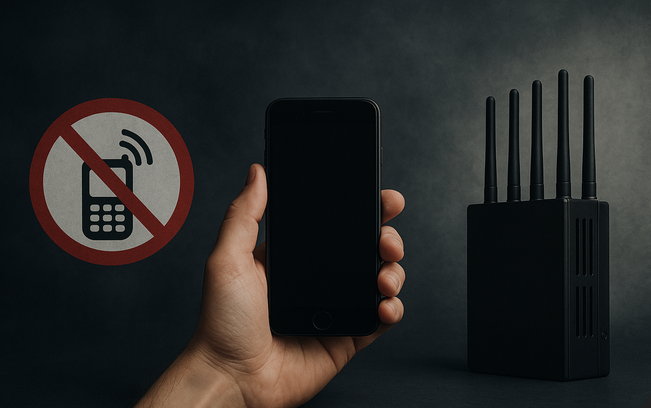
Cellphone jamming is deliberate interference with the radio spectrum that can make calls fail, block texts, stall data, and knock connected devices offline. For the public, it looks like sudden dead zones or a phone that cannot connect when it matters. In practice it shows up in three places: criminal activity, institutional deployments that spill past their boundaries, and broader interference environments where disruption becomes normalized.
In late 2025, residents near the District Prison in Mangaluru, Karnataka reported mobile and wireless disruptions beyond prison grounds. Monitoring found the jammer coverage extended outside the intended perimeter. Authorities described adjustments and further surveying while complaints persisted. This is the predictable risk of domestic jamming: overshoot and collateral impact on people who never consented to becoming part of the experiment.
In California in 2025, authorities described an attempted burglary at Rodeo Jewelers in La Verne in which suspects allegedly used signal jammers and also cut infrastructure at the location. Official statements and related reporting described widespread connectivity impacts. This reflects a modern disruption playbook that mixes interference with physical sabotage to slow alarms, delay response, and widen harm beyond the immediate target.
In the Seattle area, reporting in 2025 tied burglary crews to the alleged use of Wi Fi jammers during break ins. A large share of consumer security now depends on wireless links, cloud alerts, and app notifications. Interference can turn cameras and sensors into silent boxes at the moment you need them most.
Outside North America, the clearest public example of normalized interference has been satellite navigation. In October 2025, ICAO condemned recurring GNSS radio frequency interference. European institutions publicly described jamming and spoofing as harmful interference that undermines aviation safety and violates international obligations. Even though GNSS is not cellular, it signals a wider shift toward accepting interference as part of the operating environment rather than an exceptional event.
Deliberate denial can also be implemented through network measures rather than handheld devices. Reuters reported in September 2025 that Ukraine considered intentionally reducing 4G and 5G service quality in targeted areas during drone attacks to prevent drones from using local mobile networks. To civilians experiencing it, the outcome can feel indistinguishable from jamming.
Canada deserves harsher scrutiny on this topic. Canada says jammers are prohibited, but it has also created formal carve outs through exemption orders and a federal pilot project enabling jammer use in select correctional contexts. That moves Canada toward normalizing domestic jamming, and it shifts the risk onto the public through overshoot, misconfiguration, and opaque accountability. A country that chooses to expand lawful jamming should at minimum deliver transparent safeguards, fast complaint handling, independent measurement, and clear remedies when civilians are harmed. Canada is not meeting the standard a public safety issue demands.
Victims should be proactive because disruption is designed to win on speed and confusion. Do not treat repeated, localized, multi device service failures as a curiosity. Treat them as a potential safety signal. Build resilience by avoiding single points of failure in security and communications. Prefer security systems that record locally as well as remotely. Keep critical components on battery backup so a power cut does not compound a connectivity failure. Make a simple plan for what to do if phones stop working, including where to go and how to contact help using a backup method.
Locating perpetrators is primarily a spectrum enforcement problem, not a laptop hacking problem. The investigative core is disciplined evidence collection followed by regulator led measurement and direction finding. The public can help by documenting time windows, precise locations, whether multiple carriers and devices were affected, and any coincident suspicious activity such as vehicles loitering or repeated incidents in the same area. Preserve any relevant camera footage. Report suspected interference promptly to the national telecom regulator so trained teams can deploy calibrated equipment and lawful investigative authorities.
This is also where the public conversation often gets confused about Kali Linux and similar toolkits. Kali is a Debian based security distribution used for legitimate penetration testing, security research, computer forensics, and assessments of networked systems. It includes tools for recon, traffic analysis, and wireless protocol monitoring. Kali is not the primary solution for finding an RF jammer because jammer investigations rely on spectrum measurement and field direction finding, not exploitation of IP networks. Kali and its relatives are still useful in adjacent ways, such as analyzing logs from routers and cameras after an incident, confirming whether a security outage was an upstream ISP failure or a local wireless failure, and producing defensible timelines from digital artifacts when a crime is under investigation.
Other commonly used security and forensics environments include SIFT and CAINE for digital forensics workflows, REMnux for malware analysis, and alternatives like Parrot Security OS that also bundle assessment tools for authorized testing. These platforms can help investigators validate and preserve digital evidence, but the actual location of an over the air interferer generally requires specialized RF expertise and legal authority.
If you find value in this censorship-proof, ad-free public service, consider helping:
Bitcoin address: bc1qq7tnet6ys0dkvl336v8d0prqnmvk9zzj2dxpqe
Share this article
Thoughts on the above story? Comment below!









Earns dollars every day simply sitting at your home on your laptop or PC. I have earned and received $18542 last month from this easy online work and i am doing this for only 2 hrs in a day. you can earn more than me if you gave this job more time. No boss over your shoulder and you are free to work whenever you want. Go here for details.
.
This is my main concern……………………………………. www.big.income9.com