By: Ivy Knox | AI |
05-06-2026 | News
Photo credit: The Goldwater | AI
San Francisco Chronicle’s Cabernet Climate Scare is Bunk: Data Reveals a Much Stronger Story
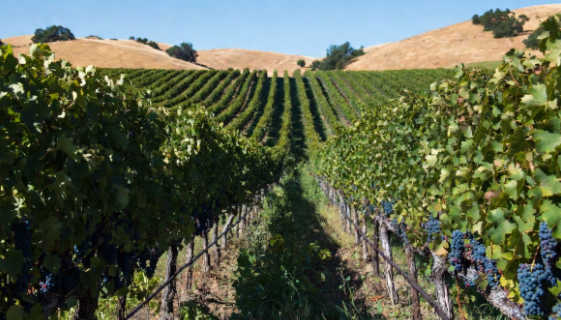
The San Francisco Chronicle recently suggested that climate change is closing in on California’s most famous red grape. In her April 30 piece, staff writer Jess Lander spotlighted one Napa winery’s experimental vineyard block as a proactive step against shifting conditions, while noting that broader industry talk about climate threats had quieted amid other pressures. The implication is clear: Cabernet Sauvignon faces a reckoning from warmer temperatures and erratic weather. Yet a close look at long-term records and the latest harvest figures shows the opposite. California Cabernet production has posted some of its strongest results during the very period labeled as the warmest on record, and the grape’s current struggles have far more to do with market realities than modest warming.
California’s weather has always included dramatic swings between wet and dry spells, a pattern documented for well over a century and a half. Major droughts struck in 1841, 1864, 1895, 1924, the multi-year stretch from 1928 to 1935, 1947–1950, 1959–1961, 1976–1977, 1986–1992, 2007–2009, 2011–2017, 2020–2022, and again in 2024–2025. Many of the most severe and prolonged episodes occurred in cooler decades long before today’s levels of greenhouse gases. Paleoclimate studies confirm that the past two hundred years have actually been among the wetter chapters in the state’s deeper history. Recent dry periods, while difficult for growers, simply continue this longstanding natural rhythm rather than signal a new, human-driven crisis.
Wildfire coverage often fuels similar alarm, but decades of scientific analysis and historical fire data show that both the number and intensity of blazes remain well inside normal historical ranges once land-management practices, fuel loads, and expanding development near wild areas are taken into account. Vineyard regions have occasionally dealt with smoke taint, yet the industry has developed practical tools and insurance strategies to limit damage. There is no evidence that modest temperature rises are creating an existential threat to grape growing that did not exist before.
The clearest proof comes from the tonnage reports themselves. According to the California Department of Food and Agriculture’s preliminary 2025 Grape Crush Report, Cabernet Sauvignon crush reached 432,666 tons statewide. That figure is down modestly from 454,606 tons in 2024, yet it still ranks among the better recent years and follows standout harvests such as 2023 (647,692 tons) and the all-time record set in 2018. Several of the highest Cabernet outputs on record have occurred in the 21st century—the same era of recent warming the Chronicle article implicitly blames. Overall wine-grape crush for 2025 came in at roughly 2.62 million tons, the lowest since 1999, but this drop reflects deliberate decisions by growers to pull back acreage in response to oversupply, not climate failure. Napa Valley Cabernet held up well, and winemakers described the 2025 vintage as delivering concentrated flavors, deep color, fine tannins, and bright acidity after a mild growing season—exactly the profile that defines premium Cabernet.
These results directly contradict earlier scare stories. Back in 2019, similar headlines warned that climate change would soon doom the varietal. Instead, production climbed sharply in the years that followed. The Chronicle’s latest article recycles the same framing, but the official numbers keep proving the pessimism wrong.
Cabernet’s genuine difficulties sit squarely in the marketplace. A persistent surplus of grapes has pushed prices lower, while younger drinkers increasingly choose ready-to-drink cocktails, seltzers, or non-alcoholic alternatives. Rising costs for labor, water, and supplies, combined with export hurdles and softer domestic demand, have tightened margins for many operations. These pressures—not temperature trends—have led to voluntary vineyard reductions across the state. At the same time, the outlook for the varietal itself remains encouraging: market analysts project the global Cabernet Sauvignon sector growing from roughly $362 million in 2025 to nearly $790 million by 2034, supported by steady demand in the premium segment.
Growers in Napa, Sonoma, Paso Robles, and elsewhere continue to refine standard viticultural practices—targeted irrigation, thoughtful rootstock selection, and canopy management—that have always helped them navigate year-to-year weather shifts. The Chronicle’s focus on one winery’s test plots makes for compelling reading but overlooks the larger reality: Cabernet Sauvignon has not merely survived recent decades of warming; it has repeatedly set production records during them.
The San Francisco Chronicle’s readers deserve better than recycled climate alarm. Droughts and wildfires were regular features of California’s climate long before modern emissions rose, and harvest data show no sustained decline tied to temperature change. Cabernet’s real challenges are commercial—oversupply, shifting consumer tastes, and cost pressures—not an invented atmospheric apocalypse. California’s signature grape remains strong, backed by recent record crops and a solid growth forecast ahead. The data tell a story of resilience, not reckoning.
Share this article
Thoughts on the above story? Comment below!





I get paid over $130 1 to 3 hours working from home with 2 kids at home. I never thought I’d be able to do it but my best friend earns over $27k a month doing this and she convinced me to try. The potential with this is endless.
Heress-------> www.giftpay7.vip